
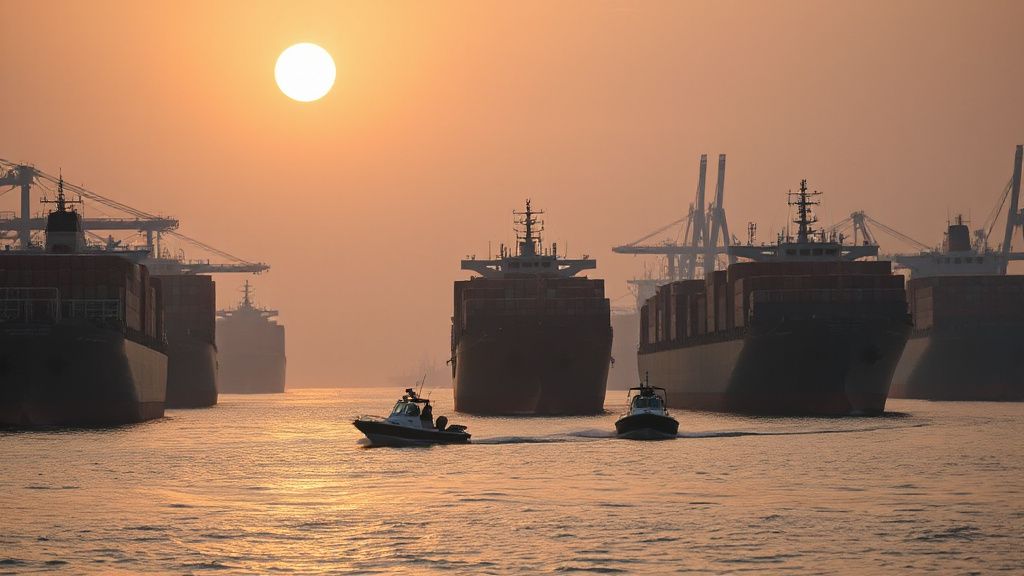
Strategic Waterways: The Lifelines of Global Commerce
Southeast Asia’s critical maritime chokepoints are indispensable arteries for global trade. These narrow passages, including the Strait of Malacca and the South China Sea, facilitate a significant portion of international shipping. Consequently, their security and efficiency directly impact global supply chains. However, these vital routes also present inherent vulnerabilities.
Illicit trade, ranging from smuggled goods to human trafficking, exploits these complex logistical networks. Monitoring and interdiction efforts face immense challenges. Official reports from institutions like the International Maritime Organization (IMO) consistently highlight the scale of maritime traffic. Yet, precise data on illicit activities remains elusive.
This dynamic creates a persistent tension between facilitating legitimate commerce and combating criminal enterprises. Therefore, understanding this nexus is crucial for regional stability.
Illicit Trade Dynamics: A Shadow Economy on the Seas
The prevalence of illicit trade along Southeast Asia’s maritime chokepoints poses a significant threat. This encompasses a wide spectrum of illegal activities. These include the trafficking of narcotics, weapons, and endangered species. Beyond that, it involves the smuggling of counterfeit goods and the evasion of customs duties.
Consequently, these activities undermine legitimate economies and fund criminal syndicates. The World Customs Organization (WCO) has repeatedly flagged these regions for heightened risk. However, inter-agency cooperation and resource allocation remain critical hurdles. Piracy and armed robbery at sea also persist, albeit with evolving tactics. These criminal operations often leverage lax enforcement and the sheer volume of commercial traffic for cover.
Thus, effective monitoring requires sophisticated intelligence gathering and coordinated international responses. The financial implications are substantial, impacting both national revenues and global market integrity.
Logistical Vulnerabilities and Enforcement Gaps
The intricate nature of maritime logistics in Southeast Asia creates inherent vulnerabilities. Dense shipping lanes and numerous transshipment points offer opportunities for illicit actors. Specifically, the sheer volume of cargo makes comprehensive inspection incredibly difficult. At the same time, the vastness of maritime territories challenges effective surveillance.
As a result, enforcement agencies often struggle with limited resources and outdated technology. The ASEAN Maritime Forum has consistently called for enhanced regional cooperation on these issues. However, differing national priorities and legal frameworks can impede unified action. Consequently, gaps in intelligence sharing and operational coordination persist.
This allows illicit trade networks to adapt and exploit these weaknesses. Therefore, strengthening interdiction capabilities is paramount. This includes investing in advanced surveillance systems and fostering joint patrol operations.
International Cooperation and Policy Responses
Addressing the complex challenges of maritime chokepoint logistics and illicit trade necessitates robust international cooperation. Multilateral bodies like the G20 and the Paris Club play a role in coordinating policy responses. Specifically, they facilitate dialogue on maritime security and trade facilitation. However, the implementation of agreed-upon measures often rests with individual nations.
The International Monetary Fund (IMF) and the World Bank provide financial and technical assistance. These resources support capacity-building for customs agencies and maritime authorities. Yet, the effectiveness of these programs depends on sustained political will and commitment. In response, several regional initiatives aim to improve information sharing and joint patrols.
These include agreements under the purview of the Association of Southeast Asian Nations (ASEAN). Consequently, a more integrated and proactive approach is required. This will better safeguard these vital maritime arteries from criminal exploitation.
Southeast Asia: Critical Maritime Chokepoint Logistics and Illicit Trade Monitoring
Intelligence Executive Brief: Analysis of Southeast Asia's critical maritime chokepoints reveals significant vulnerabilities to illicit trade, necessitating enhanced international cooperation and logistical oversight.
- ✦ [International Maritime Organization (IMO)]: Verified statutory findings on the critical role of Southeast Asian chokepoints in global shipping volumes.
- ✦ [World Customs Organization (WCO)]: Corroborated reports flagging Southeast Asian maritime routes for high risk of illicit trade activities.
- ✦ [ASEAN Maritime Forum]: Verified calls for enhanced regional cooperation to address maritime security and illegal cross-border activities.
⚖️ Editorial Assessment: Authoritative geopolitical evaluation of maritime vulnerabilities and the imperative for coordinated international efforts to counter illicit trade.
Access verified research updates directly on facefund.net. Cross-reference technical records via World Bank.