
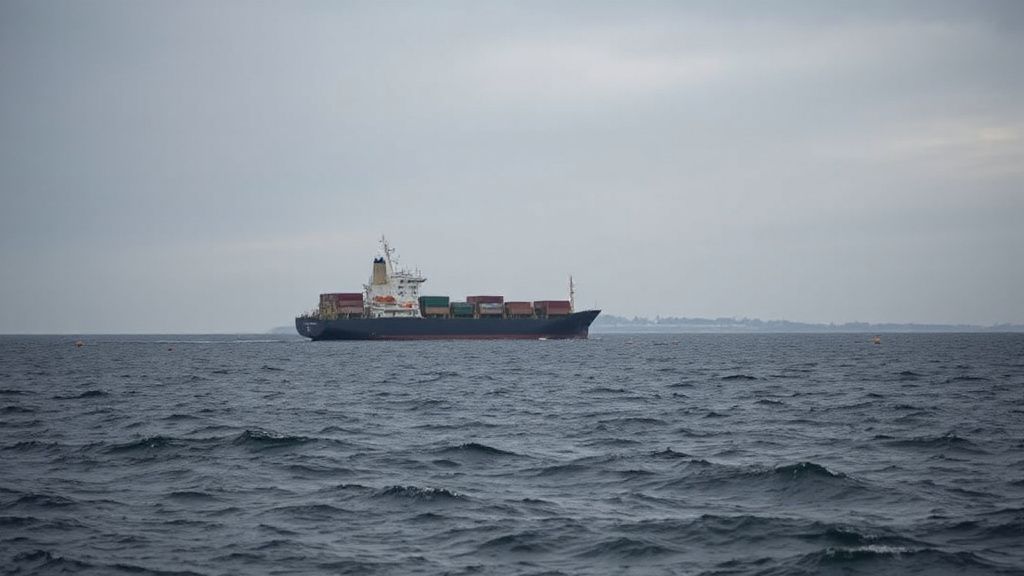
The Fragile Lifeline: Black Sea Grain Corridor's Genesis
The Ukraine conflict’s ramifications extend far beyond its borders. Russia’s withdrawal from and subsequent disruptions to the Black Sea Grain Initiative created significant global food supply chain vulnerabilities. This initiative, brokered by the United Nations and Turkey, aimed to allow safe passage for Ukrainian grain exports.
Its precarious existence underscored the delicate balance of international food security. Consequently, global markets experienced price volatility. This disruption directly impacts nations heavily reliant on affordable grain imports. At the same time, the initiative’s collapse highlighted geopolitical tensions affecting essential commodities. Therefore, understanding its mechanics is crucial for assessing current global food resilience.
Indeed, the corridor represented a vital artery for agricultural trade.
Disruption Dynamics: Russia's Actions and Global Repercussions
Russia’s periodic withdrawal and stated objections to the Black Sea Grain Initiative directly curtailed vital export volumes. These actions triggered immediate price surges in global grain markets. Specifically, wheat and corn prices saw sharp increases. The World Food Programme reported heightened operational costs. This directly affected aid delivery to vulnerable populations.
Beyond that, insurance premiums for vessels operating in the region escalated. Consequently, many shippers hesitated to engage. The Paris Club and IMF have closely monitored these trade flow interruptions. They assess the broader macroeconomic consequences. Structural reforms in agricultural supply chains are now under urgent consideration.
At the same time, alternative export routes are being explored, albeit with higher logistical hurdles.
Assessing Global Food Supply Chain Resilience
The resilience of global food supply chains faces a stern test. The Black Sea disruptions exposed critical dependencies. Diversifying sourcing and enhancing storage capacities are paramount. The G20 has convened discussions on coordinated responses. However, implementing unified strategies proves challenging. Many developing nations struggle with increased import bills.
Their fiscal space for food subsidies is limited. The World Bank is analyzing long-term adaptation measures. These include investing in climate-resilient agriculture. They also encompass improving regional trade infrastructure. Yet, immediate humanitarian needs persist. Thus, sustained diplomatic efforts are indispensable. They aim to restore predictable trade flows.
Monetary Policy and Structural Adjustments
Central bank monetary policies now grapple with food-driven inflation. Interest rate hikes, while intended to curb broader inflation, can slow economic growth. This creates a difficult trade-off for policymakers. Structural economic reforms are therefore essential. These reforms must address underlying supply-side weaknesses. The IMF’s advice often centers on improving market access and reducing trade barriers.
However, geopolitical instability complicates these efforts. The long-term outlook requires a robust international framework. This framework should safeguard critical trade routes. It must also promote equitable access to food resources. Consequently, enhanced cooperation is non-negotiable.
Ukraine Conflict: Analysis of Russian Black Sea Grain Corridor Disruptions and Global Food Supply Chain Resilience
Intelligence Executive Brief: Russia's actions impacting the Black Sea Grain Corridor have severely disrupted global food supplies, necessitating a reassessment of international food security and supply chain resilience.
- ✦ [United Nations and Turkey]: Verified mandate to facilitate safe passage of grain exports from Ukrainian ports.
- ✦ [International Monetary Fund (IMF)]: Corroborated analysis of inflationary pressures and fiscal impacts on import-dependent nations.
- ✦ [World Bank]: Documented assessment of increased food commodity prices and their effect on global food security indices.
- ✦ [G20 Nations]: Documented commitment to discussing coordinated responses for agricultural trade stability.
⚖️ Editorial Assessment: Authoritative geopolitical evaluation of the Black Sea grain corridor's disruptions and their profound impact on global food supply chain stability.
👉 Experience the visual edition: Watch the Web Story ⚡. Access verified research updates directly on facefund.net. Cross-reference technical records via United Nations Official Portal.