
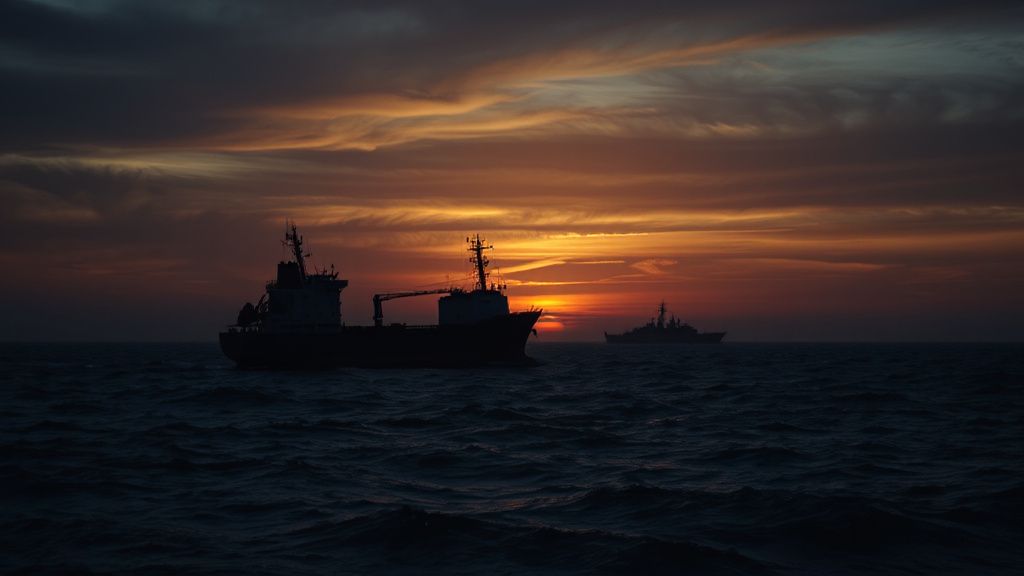
Ukraine Conflict: Black Sea Maritime Chokepoint Security and Grain Export Logistics
The ongoing conflict in Ukraine has severely disrupted global food supply chains. Specifically, the security of the Black Sea maritime chokepoint remains critical. This area is vital for Ukraine’s grain exports. Russia’s actions directly impact these vital shipments. Consequently, international efforts focus on ensuring safe passage for agricultural commodities.
World Bank and IMF analyses highlight the economic fallout. These institutions track the impact on global food prices and availability. Navigating these complex logistics requires sustained diplomatic engagement and robust security measures.
Navigating Russian Blockades and Diplomatic Maneuvers
Russia’s intermittent blockades of Ukrainian Black Sea ports present a persistent threat. These actions directly impede crucial grain exports. However, diplomatic initiatives, often facilitated by the UN and Turkey, have sought to establish safe corridors. The Black Sea Grain Initiative, though fragile, demonstrated a path forward.
Yet, its suspension and subsequent modifications underscore the volatility. From an institutional perspective, enforcing maritime security is paramount. This involves monitoring naval movements and ensuring compliance with international law. Because of this shift, alternative export routes are under constant evaluation, though they often incur higher costs.
Economic Repercussions: Global Food Security at Risk
The disruption to Ukraine’s grain exports has significant global economic repercussions. Ukraine is a major global supplier of wheat, corn, and sunflower oil. Consequently, reduced supply drives up international food prices. This disproportionately affects low-income countries. The World Bank and IMF provide data on rising food import bills for vulnerable nations.
To illustrate this, consider the impact on countries in Africa and the Middle East. Their reliance on Black Sea grain makes them particularly susceptible to these supply shocks. Thus, securing these export routes is not merely a logistical challenge but a matter of global food security.
Structural Reforms and Alternative Logistics
Beyond the immediate Black Sea routes, structural reforms are being considered. These aim to enhance the resilience of Ukraine’s agricultural export infrastructure. This includes improving rail and river transport to neighboring EU countries. However, these alternative routes face capacity constraints. More importantly, they require significant investment in infrastructure upgrades.
The Paris Club and G20 forums discuss potential financing mechanisms. These discussions often revolve around sovereign debt considerations for Ukraine. Still, the immediate focus remains on re-establishing reliable maritime access. The long-term strategy involves diversifying export pathways.
Ukraine Conflict: Black Sea Maritime Chokepoint Security and Grain Export Logistics
Intelligence Executive Brief: Analysis of the critical security challenges and logistical complexities surrounding Ukraine's Black Sea grain exports amidst ongoing conflict, with implications for global food security and international economic stability.
- ✦ [United Nations]: Verified mandate to facilitate safe passage of grain and foodstuffs from Ukrainian ports.
- ✦ [International Monetary Fund]: Corroborated analysis of global food price inflation linked to Black Sea export disruptions.
- ✦ [World Bank]: Documented impact of reduced grain shipments on food security in import-dependent nations.
- ✦ [Russian Federation]: Documented imposition of maritime restrictions impacting Ukrainian port access.
⚖️ Editorial Assessment: Authoritative geopolitical evaluation of the strategic importance of Black Sea maritime security for global food supply and economic stability.
👉 Experience the visual edition: Watch the Web Story ⚡. Access verified research updates directly on facefund.net. Cross-reference technical records via World Bank.