
Taiwan's Indispensable Role in Global Semiconductor Supply Chains
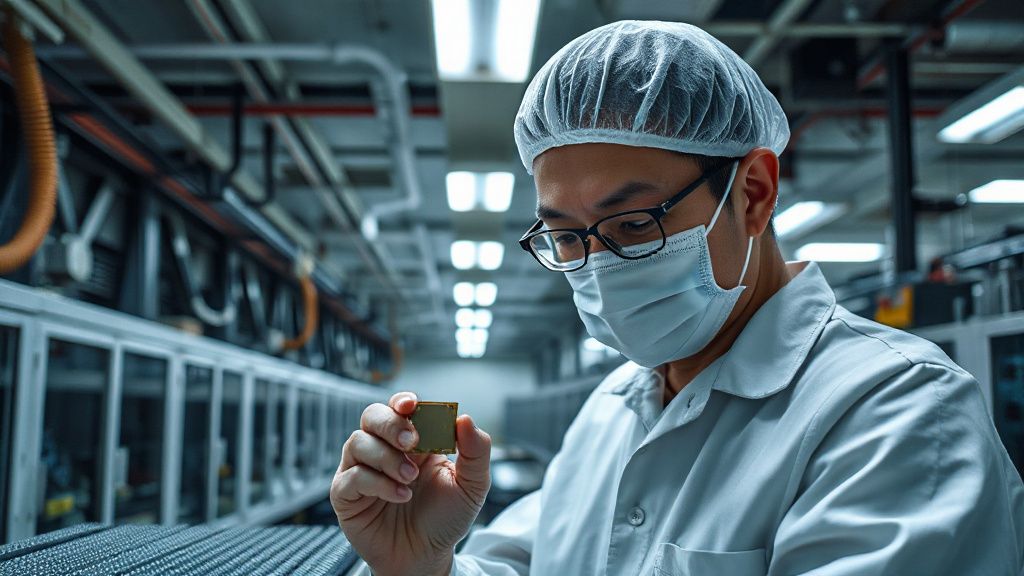
Taiwan occupies a critical nexus in the global semiconductor ecosystem. Its foundries, particularly TSMC, produce the most advanced chips. Consequently, any disruption to this supply chain carries profound economic and geopolitical implications. International semiconductor export controls directly target this strategic linchpin. These measures aim to restrict access to cutting-edge technology for certain nations.
However, they simultaneously heighten Taiwan’s own strategic vulnerability. The island’s technological prowess thus places it at the epicenter of global tech rivalries. Navigating these complex dynamics requires astute diplomatic and economic strategy.The concentration of advanced manufacturing in Taiwan presents a unique challenge. This geographic concentration amplifies the impact of any external pressure.
Therefore, global powers are increasingly focused on influencing or controlling access to these vital production capabilities. The intricate web of dependencies underscores Taiwan’s pivotal, yet precarious, position. Understanding these dependencies is key to grasping the current geopolitical landscape.
The Architecture of International Semiconductor Export Controls
Major economic blocs are implementing stringent export controls on semiconductor technology. These policies primarily target advanced manufacturing equipment and intellectual property. The United States has led these efforts, with allies often following suit. Specifically, the objective is to slow the technological advancement of geopolitical rivals.
This strategy seeks to maintain a competitive edge in critical defense and economic sectors. However, the implementation raises questions about global trade norms and technological diffusion. At the same time, these controls can inadvertently stifle innovation by limiting market access.The scope of these controls is broad.
It encompasses not only direct chip sales but also the tools and expertise required for their production. Consequently, companies worldwide must meticulously comply with evolving regulations. This necessitates robust due diligence and strategic adaptation. From an institutional perspective, these controls represent a significant shift in international trade policy.
They signal a move towards greater technological nationalism.
Taiwans Strategic Position: Balancing Alliances and Autonomy
Taiwan finds itself navigating a delicate balancing act. It must maintain its economic ties while respecting the security concerns of its key partners. Specifically, aligning with U.S. export control policies is a strategic imperative for Taipei. This alignment offers security assurances and technological cooperation.
However, it also risks alienating its largest trading partner, mainland China. Therefore, Taiwan must carefully calibrate its responses to avoid escalating tensions.The island’s economic lifeline is intrinsically linked to its semiconductor industry. Thus, any policy that jeopardizes this sector carries significant domestic implications. Beyond that, Taiwan’s ability to maintain its autonomy hinges on its technological leadership.
Consequently, preserving this edge while managing external pressures is paramount. This requires sophisticated diplomatic engagement and a clear understanding of global market forces. The island’s resilience will be tested as these tech wars intensify.
Economic Repercussions and Future Trajectories
The imposition of semiconductor export controls has tangible economic consequences. Global supply chains face potential fragmentation and increased costs. Companies may be forced to diversify their manufacturing bases. This could lead to the establishment of new semiconductor hubs, potentially reducing Taiwan’s singular dominance. However, replicating Taiwan’s advanced manufacturing capabilities is a formidable challenge.
It requires immense capital investment and decades of accumulated expertise. Consequently, the immediate impact may be more about market access and technological stagnation for targeted nations.Looking ahead, the landscape of semiconductor production is likely to evolve. Diversification efforts may gain momentum, driven by geopolitical risk mitigation.
At the same time, Taiwan will likely continue to invest heavily in research and development. It aims to maintain its technological superiority. The interplay between these forces will shape the future of global technology. Ultimately, sustained economic stability for Taiwan depends on its ability to adapt to this evolving strategic environment.
Semiconductors: International Semiconductor Export Controls: Taiwans Strategic Position in Global Tech Wars
Intelligence Executive Brief: International semiconductor export controls are increasingly impacting Taiwan's pivotal role in global technology supply chains, forcing Taipei to navigate complex geopolitical alliances and economic realities.
- ✦ [U.S. Department of Commerce]: Implemented stringent export controls restricting access to advanced semiconductor technology and manufacturing equipment for specific nations.
- ✦ [Taiwan Ministry of Economic Affairs]: Acknowledged the strategic importance of semiconductor exports and the need to comply with international partner regulations while safeguarding domestic industry.
- ✦ [Global Semiconductor Alliance]: Documented increased investment in supply chain diversification and R&D initiatives by major technology firms seeking to mitigate geopolitical risks.
⚖️ Editorial Assessment: Authoritative geopolitical evaluation and structural impact assessment of evolving semiconductor export controls on Taiwan's global tech standing.
Access verified research updates directly on facefund.net. Cross-reference technical records via International Press & Verified Wire Repository.