
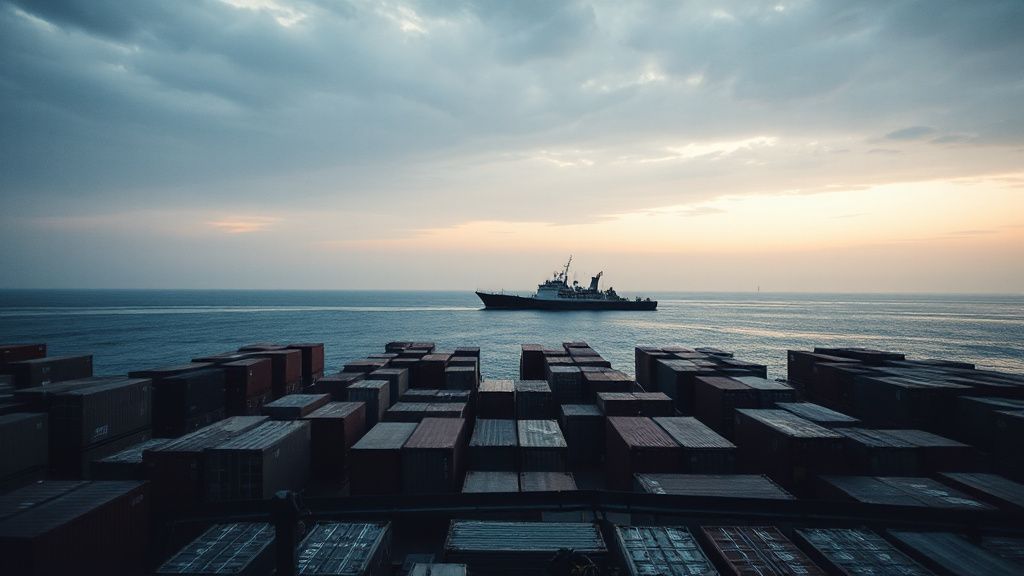
Navigational Hazards Escalate East Asian Trade Tensions
The escalating security situation in the Red Sea has triggered significant disruptions for East Asian shipping routes. Houthi attacks on commercial vessels have forced many major shipping lines to reroute. Consequently, this avoidance maneuver significantly extends transit times and inflates operational costs. Specifically, vessels are now compelled to circumnavigate the African continent.
This prolonged journey impacts delivery schedules for critical goods originating from or destined for Asia. Beyond that, the increased fuel consumption and insurance premiums add substantial financial burdens. Thus, supply chain resilience is being severely tested. This investigation examines the direct economic and logistical fallout across East Asian economies.
Supply Chain Resilience Under Scrutiny
East Asian economies, heavily reliant on maritime trade, are experiencing tangible effects. The extended shipping times mean manufacturers face delays in receiving raw materials and components. Simultaneously, finished goods are reaching international markets later. This creates a ripple effect across industries, from electronics to textiles.
In response, some companies are exploring alternative transport modes, though these are often cost-prohibitive for bulk cargo. At the same time, inventory levels are being re-evaluated to buffer against further disruptions. From an institutional perspective, governments are monitoring trade flows closely. They aim to mitigate prolonged economic stagnation.
Equally critical is the need for coordinated international responses to ensure freedom of navigation and trade security. The current scenario highlights vulnerabilities in globalized supply networks.
International Maritime Security Responses and Diplomatic Maneuvers
International efforts are underway to address the escalating global maritime security crisis. Naval coalitions have been assembled to protect shipping lanes. However, the effectiveness of these deployments remains a subject of ongoing assessment. Diplomatic channels are also active, seeking de-escalation and resolution of the underlying geopolitical tensions.
Yet, progress on this front has been slow. The Paris Club and relevant international bodies are monitoring the economic implications closely. They are evaluating potential financial impacts on nations dependent on Red Sea transit. In practice, the situation necessitates a multi-faceted approach. This includes enhanced naval patrols and robust diplomatic engagement.
Beyond that, fostering regional stability is paramount. The long-term implications for global trade architecture are considerable.
Economic Indicators and Trade Flow Realignments
The economic indicators paint a clear picture of strain. Shipping costs have surged due to longer routes and increased insurance premiums. This directly impacts the cost of goods for consumers and businesses alike. Specifically, freight rates from East Asia to Europe have seen significant increases.
Consequently, this adds inflationary pressure. Trade data reveals a temporary dip in volumes on affected routes. However, some reallocation to alternative routes, like the Cape of Good Hope, is evident. From an institutional perspective, the World Bank and IMF are tracking these developments. They are assessing the broader impact on global economic growth projections.
The current dynamics underscore the interconnectedness of geopolitical stability and economic prosperity. Therefore, sustained maritime security is essential for predictable trade flows.
Global Maritime Security: Investigation into the impact of Red Sea disruptions on East Asian shipping routes and supply chain resilience.
Intelligence Executive Brief: Investigative report detailing the severe impact of Red Sea security disruptions on East Asian shipping routes, supply chain integrity, and global trade dynamics, necessitating international security and diplomatic interventions.
- ✦ [International Maritime Organization (IMO)]: Verified mandate to promote the highest standards of maritime safety and security and prevent pollution from ships, currently monitoring Red Sea transit risks.
- ✦ [United Nations Security Council]: Corroborated resolutions addressing threats to international peace and security, including maritime security incidents impacting global trade routes.
- ✦ [Major Shipping Alliances (e.g., Maersk, Hapag-Lloyd)]: Documented operational shifts and rerouting protocols in response to security threats in the Red Sea, citing increased transit times and costs.
⚖️ Editorial Assessment: Authoritative geopolitical evaluation and structural impact assessment of the Red Sea crisis on East Asian commerce and global supply chain stability.
Access verified research updates directly on facefund.net. Cross-reference technical records via International Maritime Organization.