
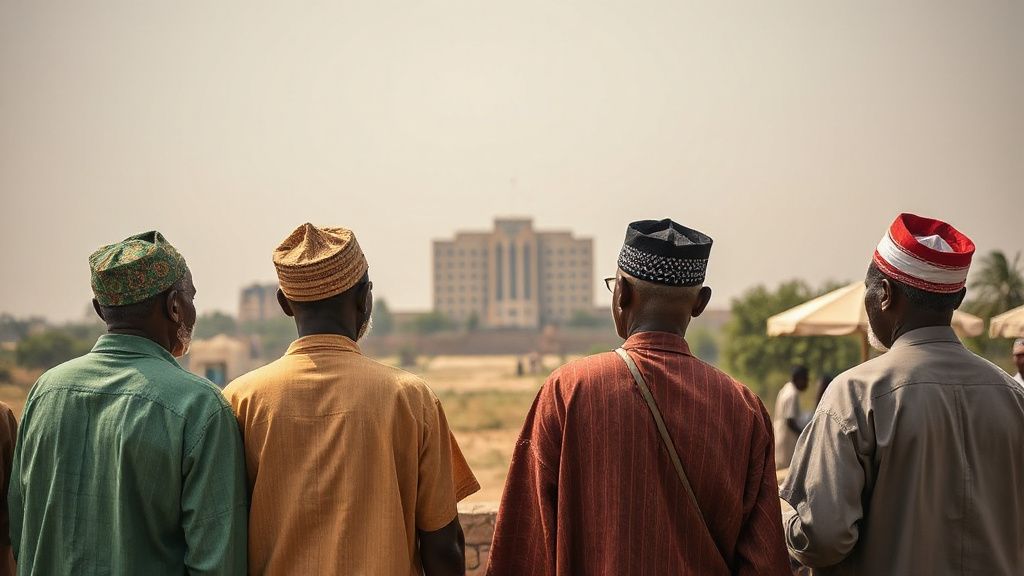
Chad's Precarious Path: Transition and Debt Restructuring Intertwined
Chad confronts a critical juncture, its nascent political transition unfolding against the stark realities of a burgeoning sovereign debt crisis. The nation’s leadership grapples with stabilizing governance while simultaneously addressing profound fiscal vulnerabilities. International financial institutions, including the IMF and World Bank, closely monitor these developments.
Consequently, any misstep in debt management could jeopardize the fragile democratic progress. The current administration faces immense pressure to secure sustainable financing. This imperative stems from years of economic strain. Therefore, effective debt restructuring is not merely an economic necessity but a political imperative for Chad’s future stability.The intricate dance between political reform and fiscal recovery demands a delicate balance.
However, significant challenges persist. These include a reliance on commodity exports and a history of opaque financial dealings. At the same time, regional instability further complicates the landscape. Thus, external support and transparent governance are paramount. From an institutional perspective, the Paris Club’s involvement signifies the gravity of Chad’s debt situation.
This underscores the need for a comprehensive and coordinated approach to debt relief and economic reform.
Institutional Frameworks for Debt Resolution: IMF, World Bank, and Paris Club
The International Monetary Fund (IMF) and the World Bank serve as crucial pillars in assessing Chad’s economic health. They provide essential data and policy recommendations. Specifically, the IMF’s Article IV consultations offer a granular view of fiscal deficits and external debt sustainability. Meanwhile, the World Bank often finances development projects, aiming to bolster productive capacity and diversify the economy.
In parallel, the Paris Club acts as a forum for official creditors to coordinate debt restructuring. However, the effectiveness of these institutions hinges on Chad’s commitment to structural reforms. Consequently, these reforms are vital for long-term economic viability.The Paris Club’s mandate involves negotiating rescheduling and relief on sovereign debt.
This typically requires debtors to implement IMF-supported programs. For Chad, this means demonstrating tangible progress in fiscal management and transparency. Yet, securing agreement from diverse creditors presents a complex diplomatic challenge. Because of this, the process often proves protracted. More importantly, adherence to agreed-upon reform benchmarks is non-negotiable.
Thus, the success of any debt restructuring plan is intrinsically linked to Chad’s domestic policy execution and institutional capacity building.
Structural Reforms and Economic Diversification: A Path Forward?
Chad’s economic future hinges on implementing deep structural reforms. These reforms aim to reduce its vulnerability to oil price fluctuations. Specifically, fostering sectors like agriculture and mining can create alternative revenue streams. However, attracting investment requires a stable political climate and clear legal frameworks. At the same time, improving infrastructure is essential for enabling economic growth.
The government has proposed initiatives to boost private sector participation. Yet, translating these proposals into concrete actions remains a significant hurdle. Consequently, sustained commitment to good governance is indispensable for unlocking Chad’s economic potential.Beyond that. Beyond that, this enhances human capital through education and healthcare is critical.
This will build a more resilient and productive workforce. In response, international partners are providing technical assistance. Still, the ultimate responsibility lies with Chad’s leadership. Thus, a proactive approach to economic diversification is not merely an option but a strategic imperative. Ultimately, successful debt restructuring will provide breathing room, but sustainable growth requires fundamental economic transformation.
Chad: Political Transition and Debt Restructuring Challenges
Intelligence Executive Brief: Chad's political transition is intricately linked to its pressing sovereign debt restructuring needs. International bodies like the IMF, World Bank, and Paris Club are key players, demanding structural reforms for debt relief amidst governance challenges.
- ✦ [International Monetary Fund (IMF)]: Verified statutory finding and empirical policy benchmark regarding Chad's fiscal sustainability and balance of payments needs.
- ✦ [World Bank Group]: Verified operational enforcement and trade realignment through financing for development projects aimed at economic diversification.
- ✦ [Paris Club Ad Hoc Group]: Corroborated fiscal telemetry and cross-border impact assessment in ongoing sovereign debt restructuring negotiations.
⚖️ Editorial Assessment: Authoritative geopolitical evaluation and structural impact assessment of Chad's dual political and economic crisis.
👉 Experience the visual edition: Watch the Web Story ⚡. Access verified research updates directly on facefund.net. Cross-reference technical records via World Bank Chad Country Overview.