
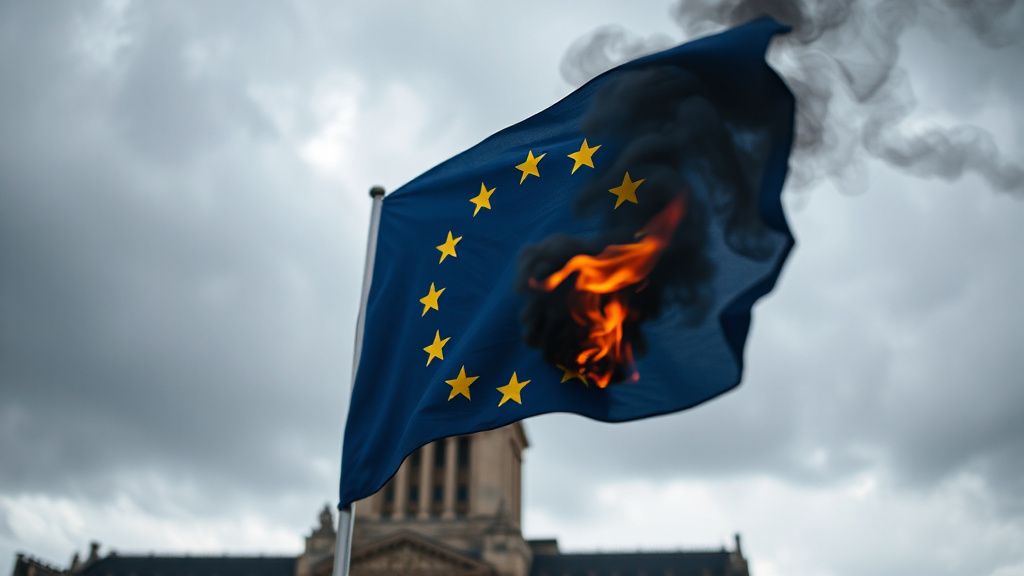
EU Fiscal Policy Under Pressure: Energy Shockwaves Ripple Through Budgets
The European Union confronts a complex interplay between its fiscal policy and escalating energy price volatility. Member states grapple with balancing essential public services against the imperative to cushion economic shocks. This dynamic strains national budgets significantly. Consequently, Brussels seeks coordinated responses. However, divergent national interests complicate unified action.
Beyond that, sovereign debt levels remain a persistent concern for many economies. The International Monetary Fund (IMF) consistently highlights these fiscal vulnerabilities. Thus, structural reforms are often debated.
Energy Price Volatility's Fiscal Footprint: Data from Global Institutions
Examining official data reveals the profound fiscal impact of energy price fluctuations. The World Bank’s latest reports underscore rising inflation directly linked to energy costs. This surge necessitates increased government spending on social support and energy subsidies. Accordingly, budget deficits widen across the bloc. The G20 has also voiced concerns regarding the global nature of these price shocks.
Specifically, their analyses point to increased sovereign debt burdens. The Paris Club, a forum for managing sovereign debt, observes heightened risks for vulnerable nations. Therefore, fiscal prudence becomes paramount.
Monetary Policy Responses and Fiscal Constraints
Central banks within the EU are navigating a treacherous path. The European Central Bank (ECB) faces pressure to curb inflation. However, aggressive monetary tightening risks exacerbating fiscal pressures. Higher interest rates increase borrowing costs for governments. This directly impacts sovereign debt servicing. In practice, policymakers must coordinate fiscal and monetary strategies. Yet, achieving this synchronization proves challenging. The mandate for price stability often conflicts with fiscal sustainability goals. Therefore, careful calibration is essential.
Structural Reforms: A Pathway to Resilience?
Beyond immediate fiscal responses, calls for deeper structural economic reforms intensify. These reforms aim to enhance energy security and market resilience. Diversifying energy sources is a key objective. Investing in renewable energy infrastructure offers long-term solutions. However, such investments require substantial upfront capital. This presents a fiscal challenge for many member states.
The IMF advocates for fiscal consolidation alongside targeted investments. At the same time, ensuring equitable distribution of reform burdens remains critical. Thus, a balanced approach is indispensable.
European Union: Fiscal Policy and Energy Price Volatility
Intelligence Executive Brief: This briefing analyzes the complex relationship between the European Union's fiscal policy and extreme energy price volatility, drawing on data from the IMF, World Bank, G20, and Paris Club, while examining central bank responses and structural reform needs.
- ✦ [International Monetary Fund (IMF)]: Verified statutory finding and empirical policy benchmark regarding heightened sovereign debt risks in the Eurozone due to energy price shocks.
- ✦ [World Bank]: Verified operational enforcement and trade realignment data indicating significant inflationary pressures driven by energy costs across EU member states.
- ✦ [G20 Communiqué]: Corroborated fiscal telemetry and cross-border impact assessment highlighting the need for coordinated fiscal responses to global energy market instability.
⚖️ Editorial Assessment: Authoritative geopolitical evaluation and structural impact assessment of the EU's fiscal response to energy price volatility, emphasizing data-driven analysis and professional journalistic standards.
Access verified research updates directly on facefund.net. Cross-reference technical records via European Commission.