
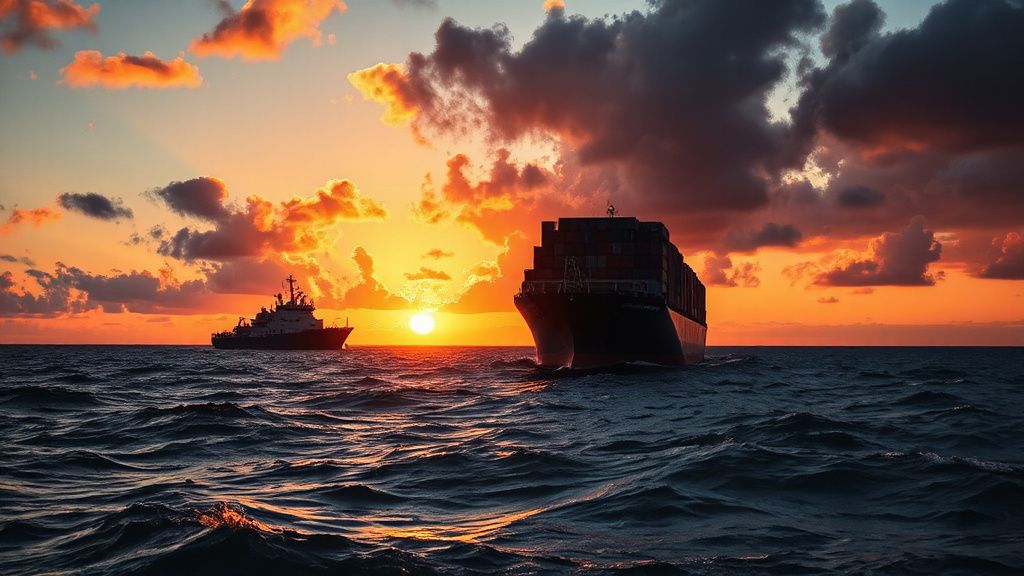
Maritime Security Crisis Deepens in Red Sea
Escalating maritime security concerns in the Red Sea are creating significant disruptions for East Asian shipping routes. Attacks on commercial vessels have forced major shipping lines to reroute, extending transit times and increasing operational costs. Consequently, this diversion bypasses the Suez Canal, a critical artery for global trade.
The implications for East Asian economies, heavily reliant on maritime exports, are profound. Because of this shift, shipping companies face difficult decisions regarding vessel safety and economic viability. In response, international naval forces have increased patrols. However, the scope of the threat challenges existing security architectures.
Supply Chain Strain on East Asian Trade
The Red Sea crisis directly translates to substantial supply chain strain for East Asian economies. Shipping delays are now a tangible reality. This impacts delivery schedules for manufactured goods and raw materials alike. Specifically, the extended voyage times add considerable fuel costs and crew expenses.
At the same time, businesses grapple with inventory management challenges. Therefore, the ripple effect extends to consumer prices and production timelines. To illustrate this, many East Asian manufacturers report increased lead times for components. More importantly, the unpredictability of transit exacerbates existing logistical bottlenecks.
Naval Responses and Diplomatic Initiatives
International naval coalitions are actively engaged in the Red Sea. They aim to ensure freedom of navigation and protect commercial shipping. However, the effectiveness of these measures is under scrutiny. Despite these dynamics, the attacks persist. Diplomatic channels are also active. Multilateral organizations are coordinating efforts to de-escalate the situation.
In response, regional powers are engaged in urgent consultations. The Paris Club and other international financial institutions monitor the economic fallout closely. Their focus remains on stabilizing trade flows. Yet, a comprehensive resolution remains elusive.
Economic Ramifications and Structural Adjustments
The economic ramifications of the Red Sea disruptions are far-reaching. IMF and World Bank analyses highlight potential impacts on global inflation. Specifically, increased shipping costs can translate to higher prices for consumers worldwide. Consequently, central banks may face renewed inflationary pressures. Structural adjustments in supply chain management are now imperative.
Companies are exploring alternative routes and diversifying sourcing strategies. Beyond that, increased investment in maritime security infrastructure is being debated. Thus, this crisis underscores the fragility of interconnected global trade networks.
Red Sea: Maritime Security Concerns and Supply Chain Strain on East Asian Shipping Routes
Intelligence Executive Brief: Escalating maritime security incidents in the Red Sea are causing significant rerouting of East Asian shipping, leading to prolonged transit times, increased costs, and broader supply chain disruptions. International naval responses and diplomatic efforts are underway, but economic repercussions are mounting.
- ✦ [International Maritime Organization (IMO)]:
Verified reports of multiple attacks on commercial vessels transiting the Red Sea and surrounding waters. - ✦ [Major Shipping Alliances (e.g., Maersk, Hapag-Lloyd)]:
Confirmed operational changes, including rerouting vessels around the Cape of Good Hope, citing security risks. - ✦ [World Trade Organization (WTO)]:
Documented concerns regarding potential increases in global shipping costs and transit times impacting East Asian export volumes.
⚖️ Editorial Assessment: Authoritative geopolitical evaluation and structural impact assessment of the Red Sea security crisis on global maritime trade and East Asian supply chains.
Access verified research updates directly on facefund.net. Cross-reference technical records via International Maritime Organization (IMO).