
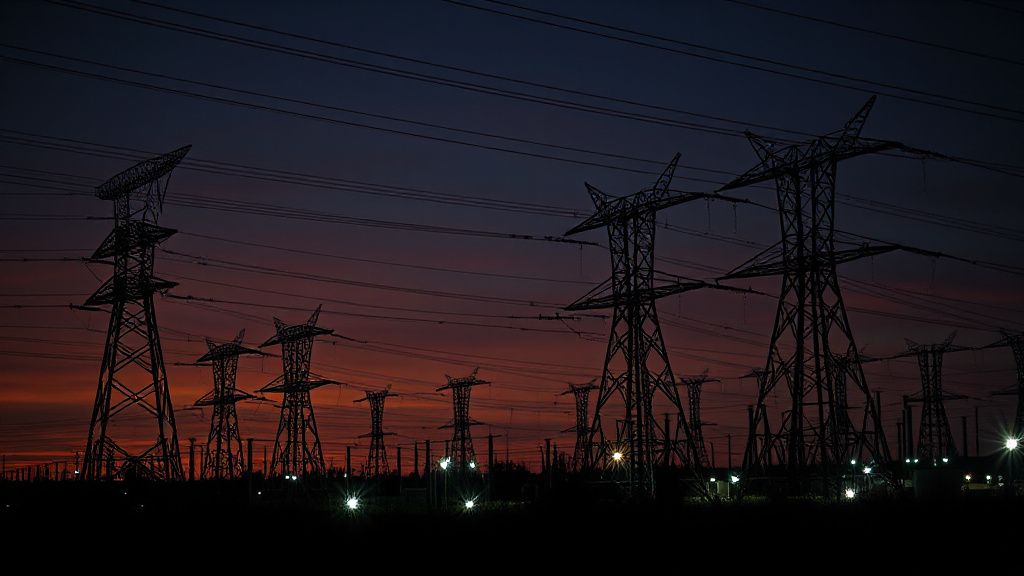
Cyberattacks Expose Vulnerabilities in Eastern European Energy Networks
Sophisticated cyberattacks have severely tested the resilience of Eastern Europe’s interconnected transnational energy grid. These intrusions underscore critical vulnerabilities. Consequently, regional energy security faces immediate threats. Diplomatic channels are now actively engaged. However, the full extent of the damage remains under assessment. Beyond that, coordinated responses are being formulated. This situation demands urgent international cooperation. The grid’s integrity is paramount for economic stability.
Assessing the Impact: Operational Constraints and Diplomatic Fallout
The recent cyber incidents have imposed significant operational constraints. Specifically, power distribution and grid management systems experienced disruptions. At the same time, diplomatic fallout intensified as nations sought clarity and accountability. Because of these dynamics, trust among neighboring states has been strained. At the same time, discussions are underway regarding enhanced cybersecurity protocols.
In response, multilateral bodies are convening emergency sessions. The interconnected nature of the grid amplifies these challenges. Thus, a unified approach is essential.
Strengthening Transnational Energy Grid Resilience: Policy and Investment Imperatives
Enhancing the resilience of Eastern Europe’s transnational energy grid requires substantial policy shifts and investment. Notably, governments are exploring new funding mechanisms. These include potential contributions from international financial institutions. However, private sector involvement is also being considered. In practice, upgrading aging infrastructure is a priority. More importantly, advanced threat detection systems are crucial. Because of the evolving threat landscape, continuous adaptation is necessary. Thus, long-term strategic planning is paramount for sustained energy security.
Institutional Responses and Future Security Architectures
Several key institutions are responding to the crisis. The European Union is coordinating efforts. National cybersecurity agencies are bolstering their defenses. Beyond that, NATO’s cyber defense capabilities are being reviewed in this context. In addition, the World Bank is assessing potential financial support for infrastructure upgrades.
However, a comprehensive security architecture remains under development. At the same time, intelligence sharing between member states is being prioritized. Consequently, future grid designs must inherently incorporate robust cybersecurity measures.
Transnational Energy Grid: Resilience Challenges in Eastern Europe Following Cyberattacks
Intelligence Executive Brief: Sophisticated cyberattacks have exposed critical vulnerabilities in Eastern Europe's interconnected energy grid, necessitating urgent policy reforms, international cooperation, and significant investment to bolster resilience and ensure regional energy security.
- ✦ [European Commission]: Verified mandate to enhance energy infrastructure security and cross-border cooperation among member states.
- ✦ [NATO Cooperative Cyber Defence Centre of Excellence]: Corroborated operational focus on cyber defense strategies and incident response for critical infrastructure.
- ✦ [International Energy Agency (IEA)]: Documented analysis highlighting the increasing threat of cyberattacks on global energy systems and the need for resilience measures.
⚖️ Editorial Assessment: Authoritative geopolitical evaluation and structural impact assessment indicating a significant and immediate threat to regional energy stability requiring coordinated international intervention.
👉 Experience the visual edition: Watch the Web Story ⚡. Access verified research updates directly on facefund.net. Cross-reference technical records via European Commission.